Your doctor said hit 100 grams of protein. Your appetite said absolutely not. If you've searched for advice online, you've seen the common complaint: “How the hell are you eating 100 grams of protein?”
Why 100 grams and why it is non-negotiable on a GLP-1
To preserve lean muscle during weight loss, research supports consuming 1.2 to 2.0 grams of protein per kilogram of body weight daily (Jäger et al., JISSN, 2017). That means your target depends on your body weight:
| Your body weight | Daily protein (1.2–2.0 g/kg) |
|---|---|
| 150 lb (68 kg) | 82–136 grams |
| 180 lb (82 kg) | 98–163 grams |
| 200 lb (91 kg) | 109–181 grams |
| 250 lb (113 kg) | 136–227 grams |
Source: protein range of 1.2 to 2.0 g/kg per Jäger et al., JISSN, 2017. Find your exact number with the calculator in our GLP-1 nutrition guide.
For most adults, 100 grams is a practical floor, not a ceiling. If you weigh over 185 pounds, 100 grams may already be undershooting the 1.2 g/kg minimum.
This floor matters more on a GLP-1 because the medication cuts how much you eat: once-weekly semaglutide lowered daily energy intake by roughly a quarter compared with placebo (Blundell et al., Diabetes, Obesity and Metabolism, 2017). When total intake drops that much without getting enough protein, a disproportionate share of the weight you lose comes from lean mass (muscle, water, and other non-fat tissue), which, according to research, can be more than a third of total weight lost (Wilding et al., J Endocr Soc, 2021; ClinicalTrials.gov, NCT03548935). Adequate protein shifts that ratio back toward fat loss. As Salas-Whalen puts it, “If skeletal muscle is the engine that powers your body’s metabolism, protein is the fuel.” (More in GLP-1 and Muscle Loss.)
Why most protein guides don’t work on a GLP-1
Most guides on this topic are written for people with a normal appetite. They hand you a food list, tell you to eat more chicken, and call it done. On a GLP-1, you are working with maybe half your usual appetite, sometimes even less. A food list doesn’t help if you can’t finish three bites.
The question isn’t “which foods have protein?” It’s “which foods give me the most protein in the fewest bites?” That reframe changes everything.
What 100 grams of protein looks like, ranked by density
When your stomach has room for only a few bites, the ranking that matters more than protein per serving is protein per calorie. Getting the most protein for the fewest bites matters twice as much on a GLP-1 because your appetite may be half what it used to be.
The table below ranks common sources by grams of protein per 100 calories. Foods at the top deliver the most protein for the least stomach space; foods near the bottom are healthy but less efficient when every bite counts.
| Food | Protein per 100 calories | Protein per typical serving |
|---|---|---|
| Shrimp (4 oz) | ~24 grams | ~24 grams |
| Canned tuna (1 can, 5 oz) | ~22 grams | ~30 grams |
| Cod (4 oz cooked) | ~21 grams | ~20 grams |
| Whey protein (1 scoop) | ~21 grams | ~25 grams |
| Chicken or turkey breast (4 oz cooked) | ~19 grams | ~35 grams |
| Nonfat Greek yogurt (1 cup) | ~18 grams | ~23 grams |
| Sirloin steak, trimmed (4 oz cooked) | ~17 grams | ~30 grams |
| Low-fat cottage cheese (1 cup) | ~16 grams | ~24 grams |
| 95% lean ground beef (4 oz cooked) | ~15 grams | ~24 grams |
| Firm tofu (1 cup) | ~12 grams | ~20 grams |
Source: USDA FoodData Central. Values are approximate and vary by cut and preparation.
How much protein per meal, and how to spread it across the day
To hit 100 grams on a small appetite is to stop thinking about a daily total and start thinking about anchors. Eating 25 to 30 grams of protein at each of several meals might stimulate more 24-hour muscle protein synthesis than the same amount eaten unevenly (Mamerow et al., Journal of Nutrition, 2014), and Salas-Whalen turns that into a simple rule:
“Count no more than 30 grams of protein per meal. Aim to space your daily protein intake across four portions, each with around 25 to 30 grams of protein at a time. Get the protein off your plate first.”
— Dr. Rocio Salas-Whalen, WeightlessTwo habits make this work on a GLP-1. One is protein first: eat it before anything else on the plate, because you may fill up after a few bites. The other is starting early. As she writes, “Getting a solid dose of protein within the first hour or so of waking up gives you a head start and helps distribute your intake across the day, which is much easier on your appetite than trying to cram it all in at the end.”
Here is what a 100-gram day looks like when appetite is low:
| Anchor | Food | Protein |
|---|---|---|
| Breakfast | 1 cup nonfat Greek yogurt + 1 egg | ~29 grams |
| Lunch | Methodology Sustain meal (e.g., Green Goddess Kale Salad with Seared Salmon) | ~35–50 grams |
| Afternoon | ½ cup cottage cheese, or a protein shake | ~12–25 grams |
| Dinner | Methodology Sustain meal (e.g., Thai Green Curry Colossal Prawns) | ~35–50 grams |
| Total | ~111–154 grams |
This is roughly what a day on the Sustain program looks like, pre-portioned to these targets. Two Sustain meals handle 70 to 100 grams on their own; you fill the rest with a breakfast anchor and a snack.
Protein without cooking (no-cook options for low-energy days)
On the days a GLP-1 leaves you with no appetite and no energy to cook, the goal is protein you can grab and eat in under a minute. When solids feel like too much, a shake or a blended protein-rich soup goes down when a chicken breast will not. Stir unflavored protein into oats, soup, yogurt, or your morning coffee. And keep a rough tally, because it is easy to overestimate how much you actually ate. Keep these on hand:
The amount of each no-cook option it takes to reach 20 g of protein, and the calories that costs you. Shorter bar = more protein per calorie. Bars use the same scale as the chart below, so the two are directly comparable.
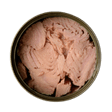 91 cal
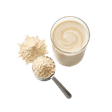 107 cal
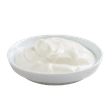 113 cal
 117 cal
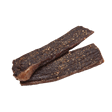 120 cal
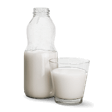 123 cal
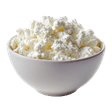 125 cal
- 125 cal
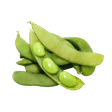 209 cal
 246 cal
Sources: USDA FoodData Central for canned tuna, eggs, Greek yogurt, cottage cheese, and edamame; product labels for the branded items — Siggi’s plain nonfat skyr, Fairlife fat-free ultra-filtered milk, and lean beef and turkey jerky (values vary by brand; choose low-sugar). Approximate; the ready-to-drink shake assumes a 30 g protein, 160-calorie bottle. One label caution: many “protein” bars and shakes are built on refined sugar and seed oils, so read the ingredients and pick clean ones.
Protein and strength: timing around workouts
Protein preserves muscle; resistance training two to three times a week tells your body to keep it (see GLP-1 and Muscle Loss). For most people, total daily protein matters far more than precise timing, so hitting your 100-plus grams across the day is the main event. That said, a 25-to-30-gram anchor within a couple of hours of a strength session is a sensible way to spend one of your daily doses, and it fits the even-distribution pattern that supports muscle protein synthesis (Mamerow et al., 2014). Whey is a convenient choice here because it is a complete, fast-digesting protein, which is why Salas-Whalen calls it an ideal post-workout option. On a GLP-1, a post-workout shake also solves the “not hungry after exercise” problem, since it is easier to drink 25 grams than to face a plate.
Can you hit 100 grams without meat?
Yes, it just takes a little more planning, because most plant proteins are “incomplete.” Salas-Whalen’s guidance: “If you rely heavily on plant proteins, it’s best to combine complementary incomplete proteins (for example, rice and beans or hummus with whole-wheat pita) to help round out the amino acid profile of your meals.” Greek yogurt, cottage cheese, eggs, tofu, tempeh, edamame, lentils, and a plant or whey protein powder make 100 grams realistic without meat. The harder part is doing it every day.
The difference is knowing which ones give you the most per serving. Most online lists rank plant proteins per 100 grams of raw ingredient, which overstates what ends up on your plate (dried lentils look twice as protein-dense as cooked ones). These numbers are what you actually get, ready to eat:
What 20 g of protein looks like from each, and the calories it costs to get there. Shorter bar = more protein per calorie. Bars use the same scale as the chart above, so the two are directly comparable.
- 117 cal
- 125 cal
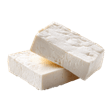 167 cal
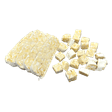 195 cal
- 209 cal
- 246 cal
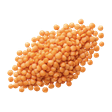 256 cal
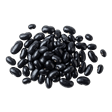 303 cal
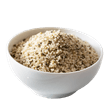 332 cal
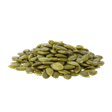 380 cal
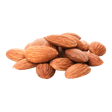 547 cal
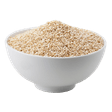 555 cal
Source: USDA FoodData Central. All values at cooked or ready-to-eat serving sizes; pumpkin seeds are shelled kernels (pepitas).
Stack two or three per meal to clear 25 grams per sitting. Adding a scoop of plant or whey protein powder to any of the top four gets a single meal past 40 grams.
Here is what a 100-gram day without meat can look like:
| Meal | Food | Protein |
|---|---|---|
| Breakfast | 1 cup nonfat Greek yogurt + 1 scoop protein powder stirred in | ~48 grams |
| Lunch | 1 cup lentil soup + ½ cup edamame | ~27 grams |
| Snack | ½ cup cottage cheese | ~12 grams |
| Dinner | Firm tofu stir-fry (1 cup tofu) + ½ cup black beans | ~27 grams |
| Total | ~114 grams |
The standard behind the meals
Everything above works whether you use a meal delivery service or not. But that daily math and prep is what actually breaks people. The reason we built the Sustain GLP-1 program to a fixed protein target, 30 to 50 grams per meal and 100 to 140 grams a day, is that it is a program that counts for you, thereby removing the daily math.
The standard behind those meals is not marketing. Methodology is the only US meal delivery service whose meals were the clinical intervention in a peer-reviewed randomized crossover trial published in the American Journal of Clinical Nutrition (Gardner et al., 2022). Separately, dietary adherence was about 34% higher when meals were delivered than when participants prepared the same food themselves (Landry et al., Nutrients, 2021). These are findings about study participants, not promises about your results.
Skip the math. Hit your protein.
Methodology's Sustain program delivers meals engineered to these targets: 30 to 50 g protein per meal, 100 to 140 g per day, with zero gluten, dairy, refined sugar, or seed oils.
See the Sustain GLP-1 ProgramFrequently asked questions
How do I eat 100 grams of protein a day?
You can use these strategies: anchor 25 to 30 grams at three or four points in the day (Mamerow et al., 2014), eat your protein first, frontload it at breakfast, and use protein-dense foods plus a shake when solids are hard.
How much protein do I actually need on a GLP-1?
1.2 to 2.0 grams per kilogram of body weight a day preserves lean muscle during weight loss (Jäger et al., 2017), about 100 to 140 grams for many adults, more if you weigh more. Treat 100 grams as the practical floor, not the ceiling (Salas-Whalen, Weightless). Find your exact target →
Is 100 grams of protein a day too much?
For most adults losing weight, no. The 1.2 to 2.0 grams per kilogram range is well-supported for preserving muscle during a calorie deficit (Jäger et al., 2017). If you weigh over 185 pounds, 100 grams may actually be too little. People with kidney disease should consult their physician before increasing protein intake.
Is 100 grams of protein enough on a GLP-1?
It depends on your body weight. At 150 pounds, 100 grams falls inside the muscle-preservation range. At 200 pounds, you may need closer to 110 to 180 grams to stay within the 1.2 to 2.0 g/kg target (Jäger et al., 2017). Use the body-weight table above or the calculator in our GLP-1 nutrition guide to find your range.
What foods have the most protein per calorie?
Shrimp (~24 grams per 100 calories), canned tuna (~22 grams), whey (~21 grams), chicken breast (~19 grams), and nonfat Greek yogurt (~18 grams) top the list (USDA FoodData Central). When appetite is small, protein per calorie matters more than protein per serving.
Can I hit 100 grams of protein without cooking?
Yes. Ready-to-drink shakes (~30 grams), canned tuna (~30 grams), Greek yogurt (~23 grams), cottage cheese, skyr, and pre-cooked eggs stack to 100 grams with zero cooking (USDA FoodData Central).
Can I hit 100 grams without meat?
Yes. Combine complementary plant proteins and lean on eggs, Greek yogurt, cottage cheese, tofu, edamame, lentils, and a protein powder (Salas-Whalen, Weightless).
Do I need protein shakes?
No, but they help when your appetite is low: one scoop of whey is ~25 grams of easy, drinkable protein (USDA FoodData Central), which is a quarter of your day in one glass.
How much protein per meal is best?
Research shows around 25 to 30 grams because this is about the most your body directs toward muscle at one sitting, and spreading it beats one big dose (Mamerow et al., 2014).
- Jäger R, et al. Journal of the International Society of Sports Nutrition, 2017. PMC5477153.
- Mamerow MM, et al. Journal of Nutrition, 2014. PMID 24477298.
- Blundell J, et al. Diabetes, Obesity and Metabolism, 2017. PMC5573908.
- Wilding JPH, et al. New England Journal of Medicine, 2021 (STEP 1; primary weight-loss efficacy and safety outcomes — does not include body-composition data).
- Wilding JPH, et al. Impact of Semaglutide on Body Composition in Adults with Overweight or Obesity: Exploratory Analysis of the STEP 1 Study. Journal of the Endocrine Society, Vol. 5, Suppl. 1, 2021 (140-participant DXA sub-study; source of the lean-mass figure).
- Gardner CD, et al. American Journal of Clinical Nutrition, 2022. PMC9437985.
- Landry MJ, et al. Nutrients, 2021. PMC8002540.
- USDA FoodData Central.
- Salas-Whalen R. Weightless: The Definitive Guide to GLP-1 Weight Loss Medications. Rodale Books / Penguin Random House, 2026. Chapters 5–6.